By Richard Lee
On Monday, Vice President Kamala Harris appeared on 60 Minutes, the nation’s oldest and most-watched television newsmagazine,
But what she did the following day will reach a different— and possibly larger — group of voters.
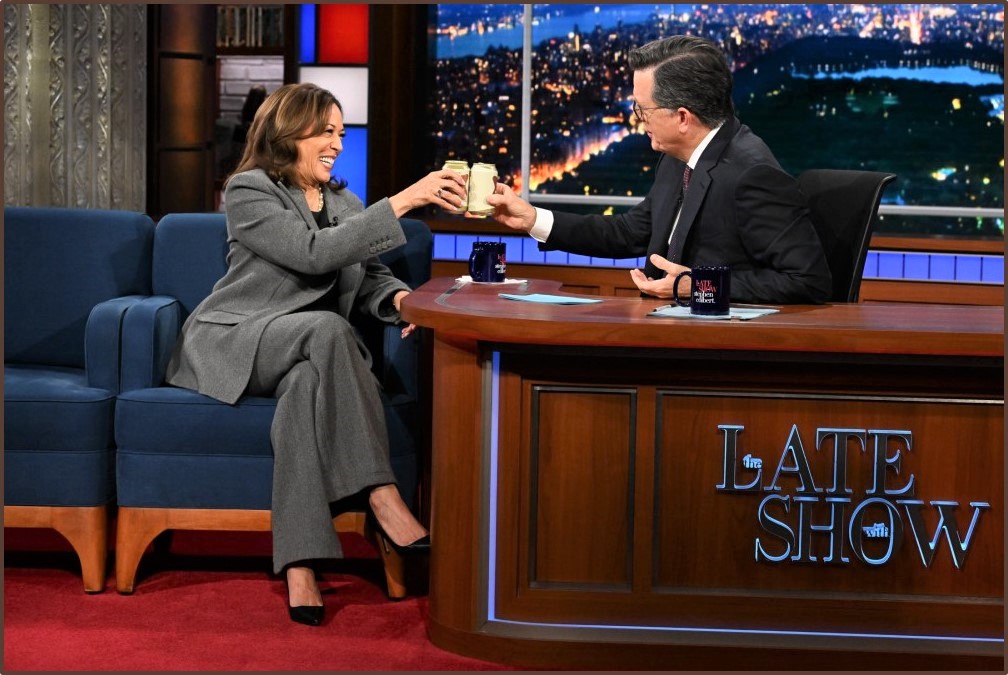
On Tuesday, Harris was a guest on The View, the Howard Stern Radio Show and the Late Show with Stephen Colbert. A few days earlier. she was featured on Alex Cooper’s Call Her Daddy podcast. Harris’ running mate, Tim Walz, also got into the act, appearing on Jimmy Kimmel Live! on Monday night.
Why do these appearances matter?
First, the average voter does not live and breathe politics. By appearing on entertainment programs, candidates are reaching large numbers of voters who don’t regularly follow politics.
Secondly, this strategy enables candidates to avoid the scrutiny and tough questions of seasoned journalists. For example, when Stephen Colbert asked Harris about the swing states, his questions were (for Pennsylvania), “Steelers or Eagles?” She said “49ers.” For Michigan, he asked her to name her favorite Bob Seger songs. She replied that she was a fan of Detroit’s Aretha Franklin and Eminem. For Wisconsin, she and Colbert shared a beer.
The result was a series of headlines about light-hearted topics, taking attention away from serious and often controversial matters of a campaign for the highest office in the nation.
The strategy is not a new one. One of the first candidates to use entertainment to work around the media was Bill Clinton. In his first run for the presidency, Clinton was trailing President George H.W. Bush by a wide margin. In some polls, he was barely ahead of Ross Perot, a third party candidate. Whenever Clinton, who was then the governor of Arkansas, sat down with a reporter for an interview, the conversation centered on three topics:
- Had he dodged the draft to avoid military service in Vietnam?
- Had he ever smoked marijuana?
- Were rumors of his womanizing true?
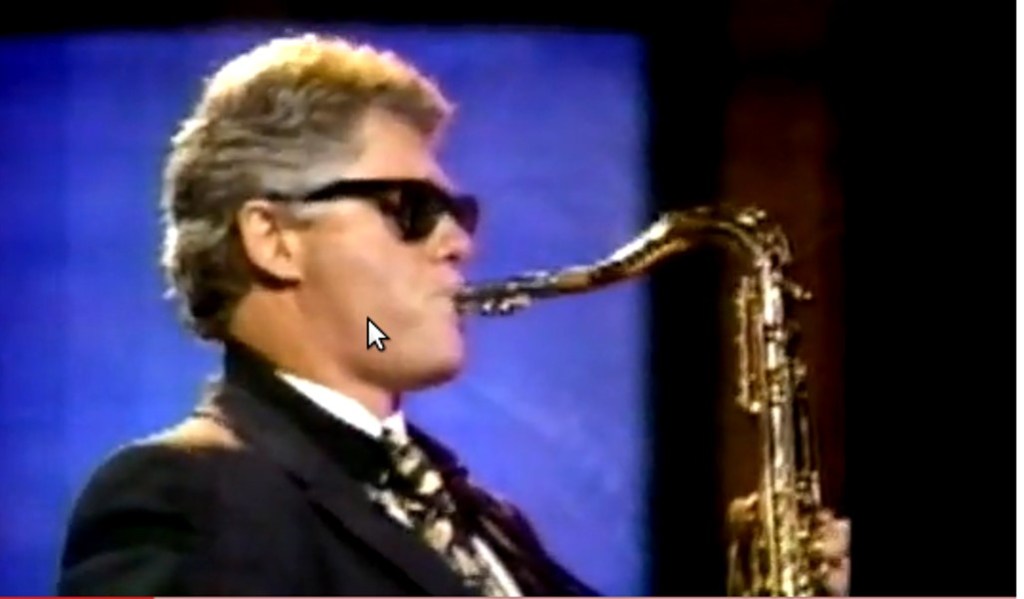
So, Clinton’s staff, comprised largely of young people, decided to try an unorthodox approach to introducing him to voters. At the time, presidential candidates typically went on shows such as Meet the Press and Face the Nation. Clinton’s staff booked him on the Arsenio Hall Show, a somewhat edgy talk show. They arranged for him to sit in with the band and play the saxophone. They had him don sunglasses and funky tie.
The strategy worked. Clinton made a series of similar entertainment appearances, which helped him gain popularity and eventually win election.
As author Joseph Hayden observed in his book “Covering Clinton: The President and the Press in the 1990s,”What Clinton realized in 1992 was that soft-news exposure was just as helpful to his campaign as hard-news exposure: that being seen and heard were more important than being written about; and that televised contact with ordinary voters in low-key situations was more profitable than regular meetings with ‘professional’ journalists.”
As we are seeing in this year’s campaign, the lesson Clinton learned in 1992 still rings true for today’s candidates.
Richard Lee, executive director of the Jandoli Institute, covered politics and government as a reporter and later served as Deputy Director of Communication for two New Jersey governors.
Categories: Jandoli Institute, Media, Politics, Richard Lee, richleeonline


Leave a Reply