By Richard Lee
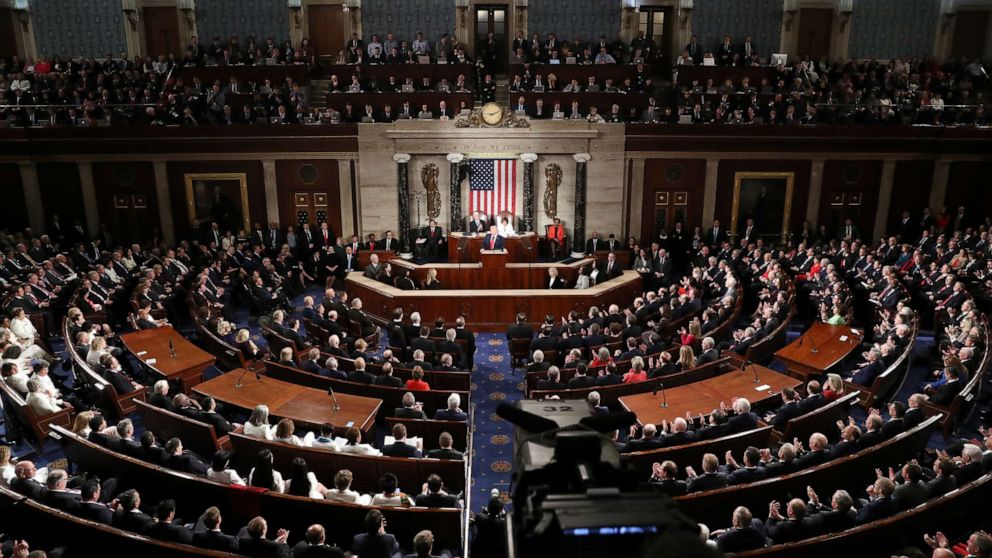
When President Donald J. Trump delivers the State of the Union address Tuesday, the scene inside the U.S. Capitol will look familiar. House and Senate members, the cabinet, Supreme Court justices and other dignitaries will fill the House Chamber and listen to the president speak about his accomplishments and goals.
But given today’s mass communication technology, is it time to re-think the way presidents deliver the State of the Union?
More often than not, the key elements of the president’s address already are known before the event takes place. Decision-makers have been briefed, and information has been leaked to reporters whose news reports have made the information available to the public at large. Although not every detail of every program is known ahead of time, there generally is an absence of suspense, save for counting the number of times the speech is interrupted by applause.
Rather than serving as the primary means of announcing new information to lawmakers and the citizenry, these speeches have become elaborate and sophisticated events. Is all the fanfare needed?
From a legal standpoint, U.S. Constitution does mandate an annual formal address to Congress. The document stipulates that the president “shall from time to time give to the Congress Information of the State of the Union, and recommend to their Consideration such measures as he shall judge necessary and expedient.” The president probably could send an email to the members of the Senate and the House to fulfill the Constitutional requirement — or just post the details on a social media platform. Another option would be to record the speech as a simple video message, accompanied by links to pages with specific details on initiatives, programs and other items included in the annual report.
But despite all of the technology available to today, America is not yet ready to delegate speech-making to television studios and soundstages. As a nation, we continue to value spectacle and pageantry. For example, even though the vast majority of us experience events such as the Olympics and the Super Bowl via TV, would the telecasts of these contests have the same appeal if they took place in empty arenas?
The roots of America’s infatuation with spectacle and pageantry date back to the 1800s. Before the advent of mass media, there were few if any other options for those who wished to actively engage in the political process.
“Much of political life was necessarily acted out in the streets,” historian Michael McGerr wrote in The Decline of Popular Politics. “However undemocratic the results, American politics from roughly the (eighteen) ‘thirties to the ‘nineties demanded the legitimacy conferred by all classes of the people through parades and rallies and huge turnouts.”
Today’s technology and social media allow us to take part in the political process with the ease and convenience that smartphones provide. Perhaps technology will lead us to a time when traditional State of the Union speeches are things of the past, but we are not yet there.
As former presidential speechwriter Peggy Noonan wrote in her 1990 book, What I Saw at the Revolution: A Political Life in the Reagan Era, “Speeches are not significant because we have the technological ability to make them heard by every member of our huge nation simultaneously. Speeches are important because they are one of the great constants of our political history. For two hundred years, from ‘Give me liberty or give me death’ to ‘Ask not what your country can do for you,’ they have been not only the way we measure public men, they have been how we tell each other who we are.”
And this is precisely why, when the president delivers the 2026 State of the Union address, he will be speaking to a packed house.
Richard Lee, executive director of the Jandoli Institute, covered politics and government as a reporter and later served as Deputy Director of Communication for two New Jersey governors.
Categories: Uncategorized
 Jandoli Institute
Leave a comment