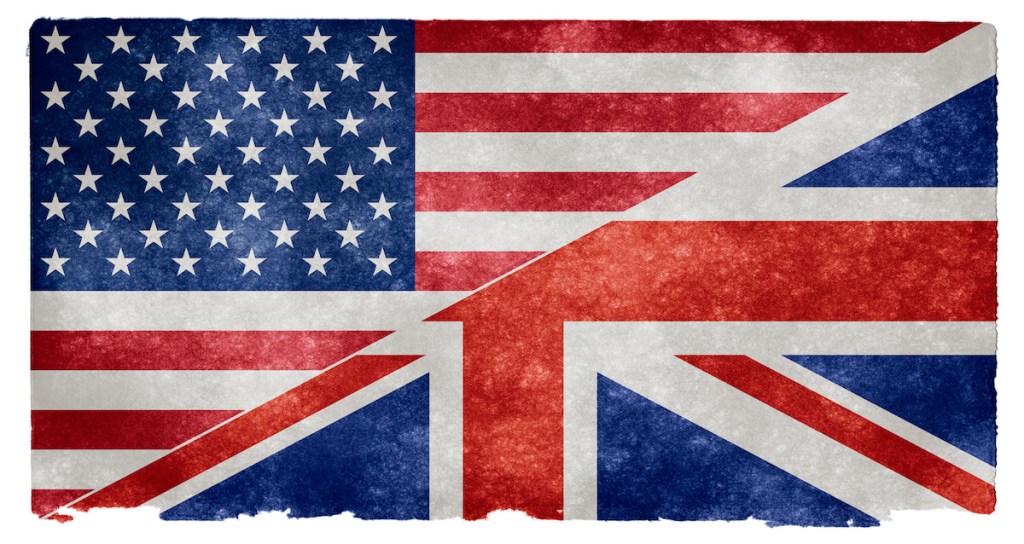
The United Kingdom chose a new prime minister in July. The United States will select a new president in November.
How do the processes the two nations use to select their leaders compare?
A group of American students studying in England this summer explored the differences in their election procedures. Here is what they found.
By Iesh Gujral, Riley Mitchell, Sullivan Murphy and Jack Valenti
Timing of Elections: Unlike in the U.S., elections do not take place every November. Instead, the Prime Minister can call a “snap election” at any time as long as no more than five years have passed between elections.
Advantages of the U.K. System
- Allows for flexibility to address political crises or shifts in public opinion.
- Can break a political deadlock and provide fresh mandates. An example is Prime Minister Boris Johnson in 2019 aiming to resolve the Brexit deadlock that had stalled Parliament.
- May prevent prolonged periods of ineffective governance.
- Enables government leaders to capitalize on favorable conditions for re-election.
Disadvantages of the U.K. System
- Can be used strategically to disadvantage opposition parties.
- Creates uncertainty and instability due to unpredictable election timings.
- May lead to voter fatigue if elections are called too frequently.
- Reduces the planning time for opposition parties and candidates. The long campaigns of the U.S. give each candidate substantial time to share ideas with the public.
Our Decision
While the U.K.’s system offers flexibility and responsiveness to immediate political needs, the U.S. approach ensures a more consistent process and more stability.
The ability to call snap elections can break deadlocks; however, this flexibility also introduces elements of uncertainty and potential instability. The unpredictability of election timings can disadvantage opposition parties, disrupt long-term planning, and potentially lead to voter fatigue if elections occur too frequently. The strategic use of snap elections by those in power to capitalize on favorable conditions can also further skew the political playing field.

Two-Party System: The U.K. has several major political parties. In the U.S., two parties – Democrats and Republicans – dominate campaigns and elections.
Advantages of the U.K. System
- With just two parties, voters may feel neither party represents their views well.
- The two-party system can lead to increased political division and gridlock.
- A lack of competition can reduce incentives for parties to innovate.
Disadvantages of the U.K. System
- The U.S. system is much easier to understand the political divide.
- The U.S. system tends to produce more stable governments with less variety of opposition.
- The U.S. system creates a strong check on the party in power as the other party is a party of opposition.
Our Decision
The U.K political system is designed to produce stronger governance. The U.S. system offers larger limitations than benefits to political dynamics. The main benefit of the system is that each party can confidently run a stable government with checks from the opposition. This can be achieved by virtue of more parties in a better way.
When more parties are present, it means diversity of political thought, increased competition, more innovation, and increased involvement of voters. Arguably, this leads to a better, more robust form of checks on power. Additionally, it offers a solution to gridlock as swaying third parties to pass legislation becomes a possibility.
Thus, upon comparing the U.S. and the U.K. political systems in a build-your-own ideal world situation, the U.K. political system is designed much better to produce strong governance.
Transition Period: When a new Prime Minister is elected, he or she takes office the next day. In the U.S., presidents are elected in November but do not take office until January.
Advantages of the U.K. System
- The new Prime Minister can enact change quickly.
- No period of uncertainty.
- Citizens can hold the new prime minister accountable faster.
- A lame duck leader may feel like his or her work doesn’t matter and make rash decisions.
- Other countries may view nations with lame duck leaders as weaker.
Disadvantages of the U.K. System
- Outgoing Prime Minister has less time to finish issues he or she is working on.
- Incoming Prime Minister doesn’t have ample time to prepare.
Our Decision
The U.S. has the better system because the new leader has time to prepare properly and has the best chance at success in the long run.
The U.S. and U.K. have different systems, with each political leader coming into office. The U.K. throws his or her candidate to the wolves and he or she is sworn in instantly. This allows the Prime Minister to make instant changes and can give an idea to the people on how the next couple of years will go.
The drawbacks are that the new Prime Minister does not have any real time to prepare himself or herself and this could lead to chaos. In the U.S. presidents have several months to prepare for office. This gives them time to get their cabinet together and write a plan for their first months in office. It also allows the country more time to adjust to change.
Selecting the Nation’s Leader: In the U.K., voters elect members of the House of Commons, who then elect their Prime Minister.
Advantages of the U.K. System
- The election can lead to a clear understanding of the winner. In the U.S., a candidate can win the Electoral College and lose the popular vote.
Disadvantages of the U.K. System
- Voters don’t have direct control of who is elected Prime Minister.
- Voters don’t really know which Prime Minister he or she is voting for when electing their house members.
Our Decision
America has the better process for electing a leader.
The indirect control of who is elected is a big issue. Voters are giving their vote for Prime Minister to someone else.
The indirect election can lead to someone having the same party allegiance as another voter but different points of view in that same party. A voter may like A but not B so they vote for a parliament member who also likes A. This parliament member though can then vote for a Prime Minister who likes B. This can also prevent people from truly knowing how popular the leader is.
In America, voters can see the popular vote and see how many people wanted this leader. In America, voters know who they are electing as leader.
Another issue with the U.K. election process is that there is a larger period of time that a parliamentary representative is in the House. Voters will truly know if they like them or regret their vote once they make their vote for Prime Minister. The idea of electing someone to then elect one’s leader is a strange concept especially in a place so small. America has the better process.
Categories: Jandoli Institute, Politics, Research
 Jandoli Institute
Leave a comment